

For more than twenty-five years, I’ve devoted my work to a simple belief: women deserve fairness, dignity, and real equality at work, and someone in their corner who truly listens. I founded one of the first law practices in the United States focused entirely on women’s workplace rights back in 1998, shaped by the public interest training I received at the City University of New York School of Law, whose motto — “Law in the Service of Human Needs” — has guided my work from the beginning. I’ve spent my career fighting for women across the full arc of their working lives, from the challenges of menstruation and pregnancy to the realities of perimenopause and menopause.
I’m a feminist and a womanist who understands, from long experience, how much harder it can be for Black and Latina women, Asian and immigrant women, and for LGBTQIA+ employees whose identities are dismissed or misunderstood. My commitment is to stand with every woman who needs clarity, support, and a real advocate — protecting her voice, her health, and her livelihood at every stage of her life.
Our Services
-
Pregnancy discrimination remains one of the most common — and most misunderstood — forms of workplace discrimination. Employers may not penalize someone for being pregnant, needing medical care, requesting time off, or asking for reasonable adjustments to continue working safely. Under federal law, employers with 15 or more employees are required to provide reasonable accommodations for pregnancy-related limitations, unless doing so would impose an undue hardship — even if the employer never volunteered that information.
In practice, pregnancy discrimination often shows up as denied accommodations, forced leave, reduced hours, demotion, termination, or retaliation for speaking up.
The law now makes clear that pregnancy must be treated like other temporary medical conditions, and employers are expected to engage in good-faith accommodations rather than pushing pregnant employees out. If your job changed for the worse after you disclosed your pregnancy or asked for help, you may have rights worth understanding.
-
Under federal, state, and local law, discrimination based on sex is unlawful. Sex discrimination can include unequal treatment related to pregnancy, gender identity, gender expression, sexual orientation, or sex-based stereotypes, as well as retaliation for opposing such treatment. It also includes sexual harassment — unwelcome, non-consensual, or unwanted conduct that sexualizes, objectifies, or targets someone because of sex, or conditions workplace benefits on submission to such conduct.
In practice, sex discrimination often shows up at work as unequal pay, failure to promote, harsher scrutiny, exclusion, or punishment for speaking up. These claims frequently overlap with other legal protections — including age or disability discrimination — particularly in matters involving pregnancy, perimenopause, or menopause, and they often compound with race or color discrimination as well.
If you’re being treated differently because of sex or gender, or retaliated against for challenging that treatment, you may have legal rights worth understanding.
-
Sexual harassment is a form of sex or gender discrimination. It includes unwelcome, unwanted, or non-consensual conduct that sexualizes, objectifies, or targets someone at work, as well as conditioning workplace opportunities or benefits on submission to such conduct.
Harassment can also take the form of a hostile or degrading work environment — including sexualized language, comments, imagery, or behavior — even without direct propositions or physical contact.
Harassment often involves power imbalances, and the impact can differ depending on whether the conduct comes from a supervisor, manager, or coworker. It frequently escalates after someone sets boundaries or speaks up. If you’re experiencing this kind of behavior — or retaliation for resisting it — you may have legal options worth exploring.
-
Many women feel pressure to stay silent about menopause at work — even when symptoms affect their health, concentration, or performance — because they fear being judged as less capable or less reliable. But menopause and perimenopause can have real workplace consequences, and employers are increasingly being challenged to take these realities seriously. Depending on your circumstances, menopause-related issues may trigger legal protections or entitle you to reasonable workplace accommodations.
-
Discrimination doesn’t always come in neat categories. Many women experience overlapping forms of unequal treatment — for example, sex discrimination intertwined with race or color discrimination, age discrimination, or discrimination based on gender identity or sexual orientation. If you’re being treated unfairly at work because of who you are — and especially if you’re being punished for speaking up about it — you may have legal protections and practical options worth exploring.
Pregnancy, Menopause, Gender Discrimination, Pay Disparity, Sex Harassment
My work has led me to teach other attorneys, speak publicly, and be recognized by peers for my focus on women’s workplace rights, including through peer-based distinctions such as Super Lawyers. I’ve taught continuing legal education programs on handling pregnancy discrimination cases, including through Lawline, and I’m regularly invited to speak about pregnancy, workplace equity, retaliation, and related civil rights issues. That recognition matters to me only insofar as it reflects the trust women place in my work and the impact of standing up, consistently, for fairness at work.
LATEST FROM JACK TUCKNER
NEWSLETTER
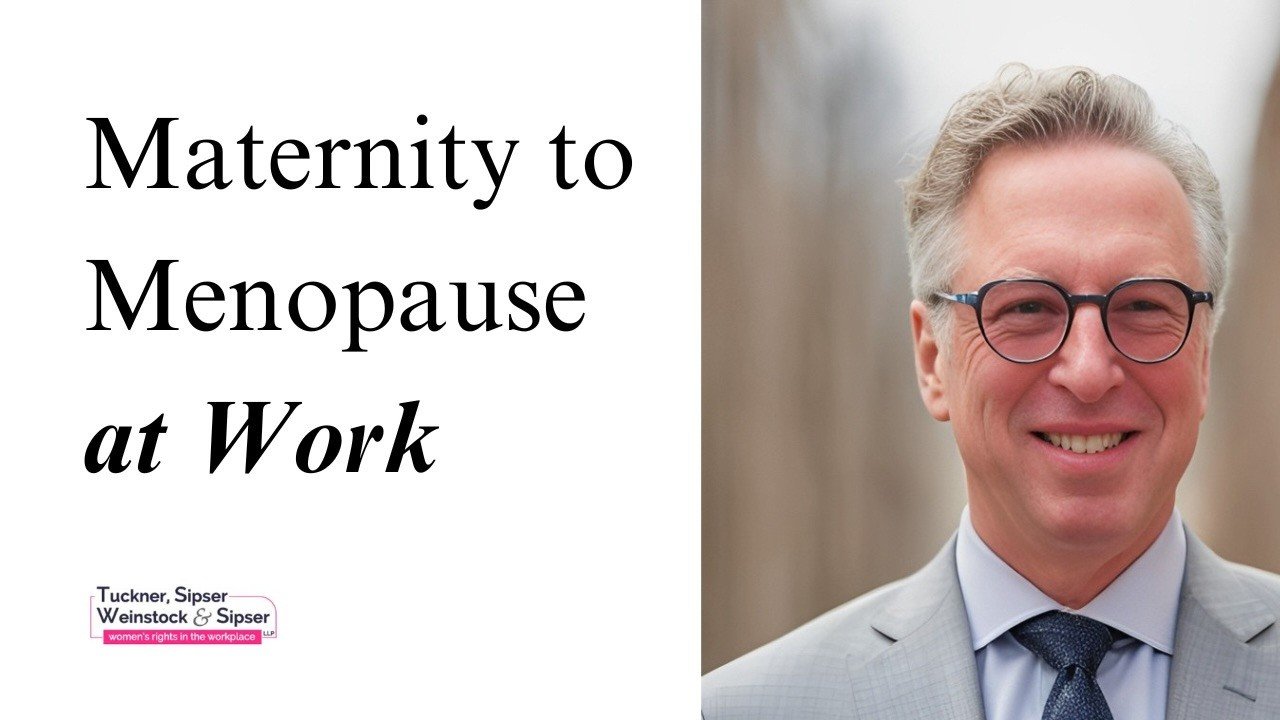
Maternity to Menopause at Work Newsletter on LinkedIn - Empowering professional women through reproductive stages. Addressing work-life challenges, protections, and guidance.

Media Center
Jack Tuckner’s latest media appearances and interviews - across newspapers, magazines, radio, podcasts, and television shows


“Thank you, Jack, for everything you have done for my daughter Kathy and I. I cannot express to you how significant the impact you have had on her growth, development and our ability to have time to bond.”
—CAROLE DEVINEK
“Jack Tuckner made it comfortable for me to cope with an extremely emotional ordeal. He is very knowledgeable and supportive and he and his staff were always responsive to my countless calls. He truly identifies and values the essence of the working mother!”
—LORE STAMBOULIAN
“I want to thank you, Jack Tuckner, for working on my pregnancy discrimination claim against my former employer…you gave me the confidence I needed in order to stand up for my rights.”
—KADI PATTERSON
As Seen On


Don’t Quit! Talk to a Lawyer
Before making any irreversible decision at work, it’s worth understanding your rights and options — because quitting can eliminate protections, undermine unemployment benefits and the leverage you may still have.